Blog

  • Best ERP Software for Small Businesses in 2026

    Best ERP Software for Small Businesses in 2026

    Meta Description: Discover the best ERP software for small businesses in 2026. Compare top tools, key features, real costs, and expert tips to pick the right system for your needs.

    Introduction

    Running a small business means wearing a lot of hats. One day you’re managing inventory, the next you’re chasing invoices, and somewhere in between you’re trying to figure out whether last month was actually profitable. When your business data lives in five different spreadsheets and your team is sharing files over email, things start falling through the cracks. Best ERP Software for Small Businesses in 2026

    That’s where ERP software comes in.

    Enterprise Resource Planning (ERP) systems were once reserved for large corporations with big IT budgets. Today, that’s no longer true. Modern ERP tools are built with small businesses in mind — they’re affordable, easier to use, and packed with features that actually matter for growing teams.

    This guide covers everything you need to know about ERP software for small businesses: what it is, how it works, which platforms stand out, and how to choose the right one without overcomplicating things or breaking the bank.

    What Is ERP Software for Small Businesses?

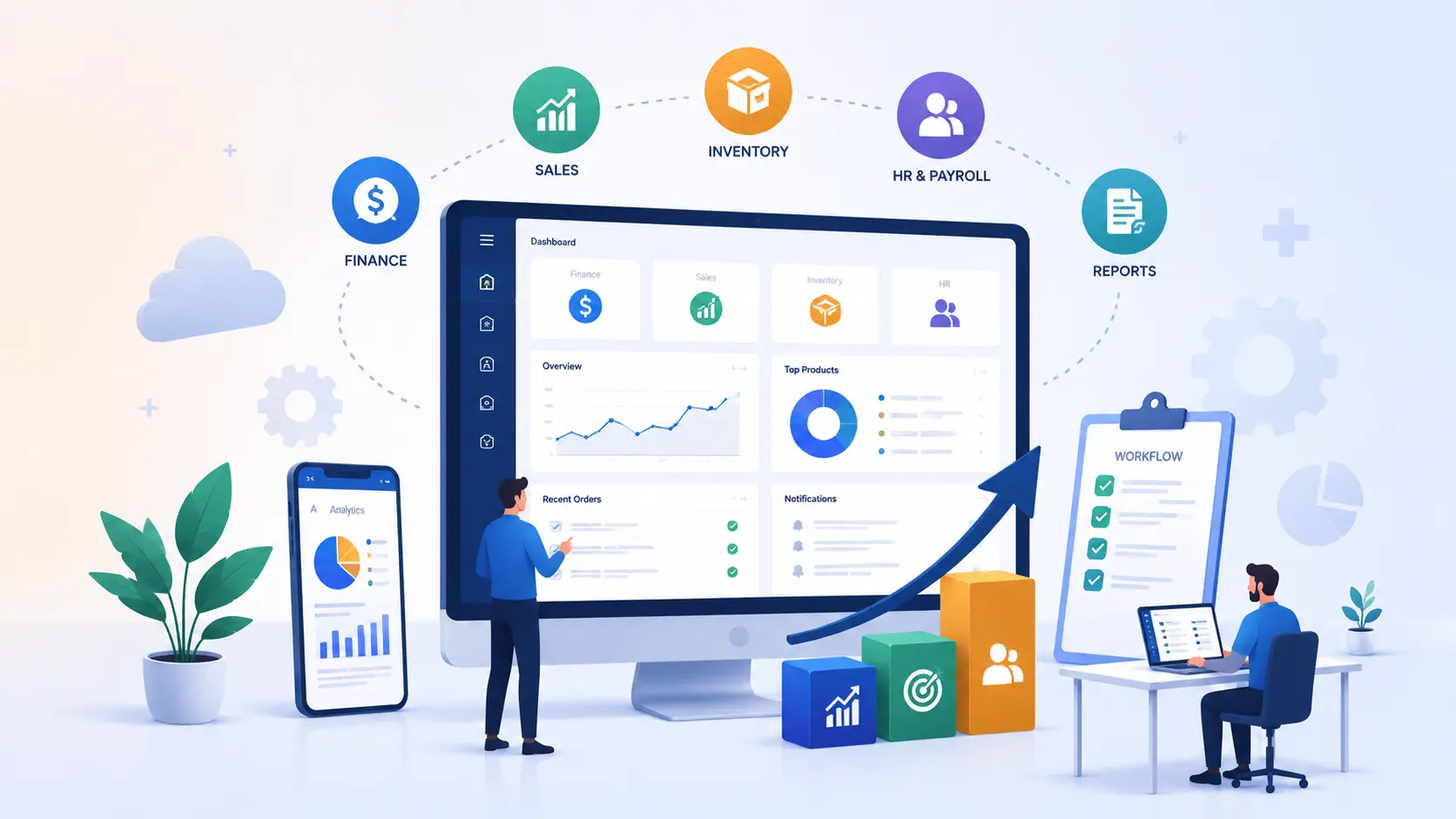
    ERP stands for Enterprise Resource Planning. At its core, it’s a single software platform that brings together the key functions of your business — accounting, inventory, sales, purchasing, human resources, and more — into one connected system.

    Instead of using separate tools for each department that don’t talk to each other, an ERP gives everyone access to the same data in real time. When a sale is made, inventory updates automatically. When a purchase order is created, it flows into your accounts payable. Everything connects. Best ERP Software for Small Businesses in 2026

    For small businesses specifically, ERP software tends to be lighter and more affordable than the enterprise-grade systems used by large companies. You get the core features you need without the complexity or six-figure implementation costs. Best ERP Software for Small Businesses in 2026

    Think of it as the central nervous system of your business. When it’s healthy, every part of your operation moves in sync.

    How Does ERP Software Work?

    An ERP system works by storing all your business data in a shared database that different modules draw from and write to. Each module handles a specific function — finance, sales, inventory, HR — but they all pull from the same pool of information.

    Here’s a simple real-world example:

    A customer places an order on your online store. Your ERP automatically checks inventory levels, reserves the stock, generates a sales order, triggers a shipment, sends an invoice, and records the transaction in your accounting ledger all without anyone switching between apps or re-entering data.

    Most modern ERP systems for small businesses are cloud-based, meaning they run in your browser or on a mobile app. You don’t need dedicated servers or an IT team. You pay a monthly subscription and access everything from anywhere. Best ERP Software for Small Businesses in 2026

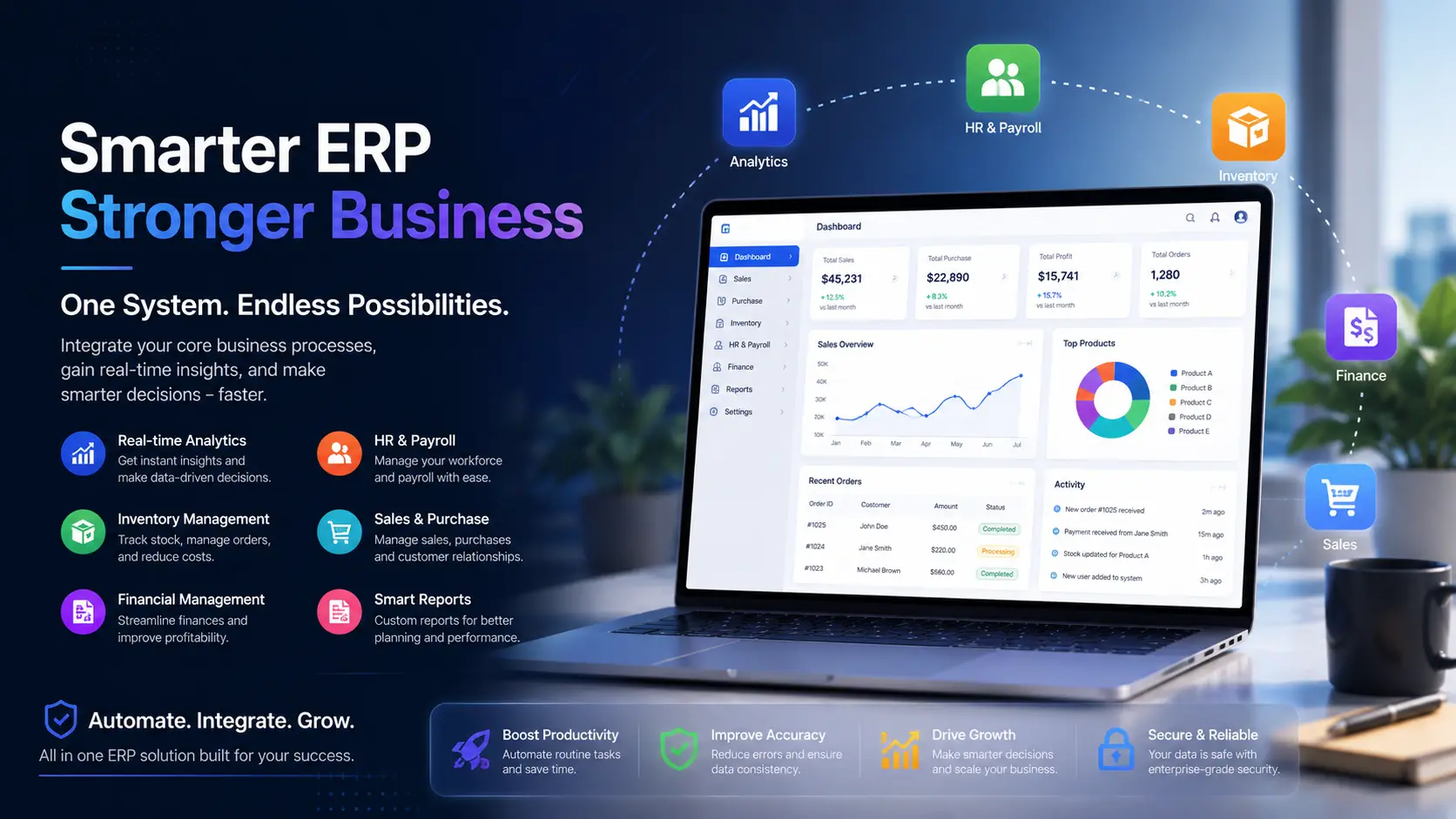
    The main components typically include: Best ERP Software for Small Businesses in 2026

    • Financial management – general ledger, accounts payable/receivable, financial reporting
    • Inventory and supply chain – stock tracking, purchase orders, supplier management
    • Sales and CRM – customer records, quotes, order management
    • HR and payroll – employee records, time tracking, payroll processing
    • Reporting and dashboardsreal-time data visualization across all departments

    Key Features to Look for in ERP Software

    Not all ERP systems are created equal. When evaluating options for a small business, here are the features that genuinely matter:

    1. Financial Management and Accounting

    The accounting module is often the heart of any ERP. Look for multi-currency support, automated bank reconciliation, tax compliance tools, and clear financial dashboards. If the numbers aren’t accurate and accessible, the rest of the system won’t matter much.

    2. Inventory Management

    For product-based businesses, inventory control is critical. Good ERP software tracks stock levels in real time, manages reorder points, handles multiple warehouses, and alerts you before you run out of fast-moving items. Best ERP Software for Small Businesses in 2026

    3. Sales Order Management

    From quote to invoice, this module tracks every step of your sales process. It should integrate with your CRM so customer history and communication are visible alongside every order.

    4. Purchasing and Procurement

    Automate purchase orders, track supplier lead times, and manage vendor relationships. When purchasing is integrated with inventory, you avoid both overstocking and stockouts.

    5. Reporting and Business Intelligence

    The best ERP systems don’t just store data — they make it useful. Look for customizable reports, real-time dashboards, and the ability to drill down into specific metrics without needing a data analyst.

    6. Integration Capabilities

    Your ERP shouldn’t exist in a vacuum. It should connect with tools you already use — your eCommerce platform, payment processor, shipping tools, or marketing software. API access and pre-built integrations are a big plus.

    7. Scalability

    You’re a small business today, but you won’t always be. Choose a system that grows with you so you’re not switching platforms again in two years.

    8. Ease of Use

    A complex system that your team won’t actually use is worse than no system at all. Clean interfaces, good onboarding resources, and accessible customer support all matter.

    Best ERP Software for Small Businesses in 2026

    Here’s a look at the platforms that consistently earn strong marks from small business users: Best ERP Software for Small Businesses in 2026

    1. NetSuite by Oracle

    NetSuite is one of the most powerful cloud ERP platforms available and is surprisingly accessible for growing small businesses. It handles financials, inventory, CRM, and eCommerce in one place. It’s on the pricier side but scales well as you grow. Best for businesses that are growing quickly and need enterprise-grade features without the enterprise complexity.

    2. SAP Business One

    SAP Business One is SAP’s product specifically designed for small and mid-sized businesses. It covers finance, sales, purchasing, inventory, and basic manufacturing. It’s more suited to product-based businesses and comes with a strong partner network for implementation support. Best ERP Software for Small Businesses in 2026

    3. Odoo

    Odoo is an open-source ERP that offers an impressive range of modules — from accounting and inventory to project management and eCommerce. It has a free community version and affordable paid plans, making it one of the most flexible options for budget-conscious small businesses. The learning curve can be steep, but the customization potential is exceptional. Best ERP Software for Small Businesses in 2026

    4. QuickBooks Enterprise

    For many small businesses, QuickBooks is the starting point for accounting. QuickBooks Enterprise adds inventory management, advanced reporting, and industry-specific features to the familiar interface. If your team already knows QuickBooks, this is a natural step up.

    5. Zoho ERP (Zoho One)

    Zoho offers a suite of integrated business apps under the Zoho One umbrella — covering CRM, inventory, finance, HR, and more. It’s one of the most affordable options available and works well for service-based businesses and small product companies. The interface is clean and user-friendly. Best ERP Software for Small Businesses in 2026

    6. Microsoft Dynamics 365 Business Central

    Business Central is Microsoft’s ERP for small and mid-sized businesses. It integrates tightly with Microsoft 365 tools like Outlook, Excel, and Teams — which is a major advantage if your team already lives in the Microsoft ecosystem. It’s particularly strong for financials and supply chain management. Best ERP Software for Small Businesses in 2026

    7. ERPNext

    ERPNext is a fully open-source ERP with a surprisingly complete feature set. You can self-host it for minimal cost or use the cloud-hosted version. It covers accounting, inventory, manufacturing, HR, and CRM. It’s ideal for technically capable teams that want maximum flexibility without licensing fees.

    Benefits of ERP Software for Small Businesses

    Eliminates Data Silos

    When your accounting, sales, and inventory teams share the same system, you stop wasting time reconciling conflicting spreadsheets. Everyone sees the same numbers. Best ERP Software for Small Businesses in 2026

    Saves Time on Manual Work

    Automated workflows handle routine tasks — generating invoices, sending payment reminders, updating stock levels, producing reports — freeing your team to focus on work that actually drives growth. Best ERP Software for Small Businesses in 2026

    Better Decision-Making

    Real-time dashboards give you a live view of your business performance. When you can see cash flow, sales trends, and inventory levels at a glance, you make smarter decisions faster. Best ERP Software for Small Businesses in 2026

    Reduces Costly Errors

    Manual data entry across disconnected systems leads to mistakes. An ERP removes the need to re-enter data between systems, which cuts errors significantly. Best ERP Software for Small Businesses in 2026

    Improves Customer Experience

    When your sales team can see inventory levels and order history in real time, they give customers accurate information. Fewer delivery surprises, faster quotes, better service overall. Best ERP Software for Small Businesses in 2026

    Supports Business Growth

    A well-implemented ERP grows with your business. Adding new users, products, locations, or sales channels becomes manageable rather than chaotic. Best ERP Software for Small Businesses in 2026

    Challenges and Limitations

    ERP software isn’t magic, and it’s important to go in with realistic expectations. Best ERP Software for Small Businesses in 2026

    Implementation Takes Time

    Even light ERP systems take time to set up properly. Data migration, staff training, and workflow configuration aren’t instant. Budget for a few weeks at minimum, and more for complex setups.

    Cost Can Be Significant

    Beyond subscription fees, factor in implementation support, training time, and potential customization costs. For very small businesses, the investment may not immediately feel justified.

    Change Management Is Hard

    Getting your team to adopt new software takes real effort. If people revert to old spreadsheets out of habit, you won’t see the benefits. Leadership buy-in and proper training are essential. Best ERP Software for Small Businesses in 2026

    Over-Complexity for Early-Stage Businesses

    If you’re a solo founder or a team of two, a full ERP system may be overkill. Simpler tools may serve you better until you hit the complexity threshold where an ERP makes sense (typically around 5–15+ employees, or when managing significant inventory). Best ERP Software for Small Businesses in 2026

    Integration Challenges

    While modern ERPs offer many integrations, connecting with niche or custom-built tools can still require development work.

    Best Practices and Tips for Choosing the Right ERP

    Start with your biggest pain point. Don’t try to fix everything at once. Identify the single area causing the most damage — maybe it’s inventory, maybe it’s invoicing — and prioritize an ERP that excels there. Best ERP Software for Small Businesses in 2026

    Involve your team early. The people who’ll use the system daily should have input on the decision. Their practical concerns will surface problems you might miss from the top down.

    Take advantage of free trials. Most cloud ERP vendors offer 14–30 day free trials. Use them seriously — enter real data, test your most common workflows, and see how the system handles your actual needs.

    Don’t over-customize on day one. Resist the urge to tailor everything before you’ve used the base system. Get running with defaults, then adjust based on real experience.

    Plan your data migration carefully. Importing years of customer, inventory, and financial data is one of the trickiest parts of any ERP rollout. Audit your data before migration and clean it up first.

    Budget for training. Cutting corners on training is one of the most common mistakes in ERP implementation. Even a great system fails if people don’t know how to use it properly.

    Review total cost of ownership. Monthly subscription fees are just one component. Factor in setup, training, potential customization, and the cost of migrating away if things don’t work out.

    Real-World Use Cases

    A Small Manufacturing Business

    A custom furniture company with 12 employees was managing production schedules in a whiteboard and invoicing in Excel. After implementing Odoo, they connected their materials purchasing, production tracking, and customer invoicing in one system. Lead time accuracy improved, material waste dropped, and the owner stopped spending Sunday evenings reconciling spreadsheets. Best ERP Software for Small Businesses in 2026

    An eCommerce Retailer

    A skincare brand selling through their own website and two marketplaces had constant inventory sync problems — overselling items that were actually out of stock. After implementing NetSuite with their Shopify integration, inventory updated in real time across all channels. Customer complaints about out-of-stock orders dropped by over 80% in the first quarter.

    A Service-Based Agency

    A small marketing agency with 18 employees used Zoho One to unify their project management, CRM, and invoicing. Before the switch, tracking billable hours across projects was painful and invoice creation took a full day each month. With everything in one platform, invoicing became a 20-minute task and revenue leakage from unbilled hours dropped noticeably.

    Conclusion

    Choosing the best ERP software for your small business isn’t about finding the most powerful or the most feature-rich system. It’s about finding the one that fits your business today, handles your most pressing problems, and grows with you over time.

    Start by understanding where your current workflow breaks down. Then look at platforms that solve that problem first, with the room to expand into other areas as your needs evolve. Leverage free trials seriously. Involve your team. Budget realistically for setup and training.

    The right ERP will pay for itself many times over — not through dramatic transformation overnight, but through hundreds of small improvements in accuracy, speed, and decision-making that compound over months and years. Best ERP Software for Small Businesses in 2026

    Your business deserves a system that works as hard as you do.

    FAQ’s

    What if I outgrow my ERP?

    Most platforms designed for small businesses can scale to mid-market size. If you eventually outgrow a lighter tool like Zoho, migration paths exist to platforms like NetSuite or SAP. Choosing a system with export-friendly data formats from the start makes future migrations far less painful.

    When should a small business move to an ERP?

    A few clear signals: you’re managing inventory manually across multiple channels, your team is using more than 3–4 disconnected tools, you’re spending significant time reconciling data between systems, or you’re scaling quickly and your current setup can’t keep up. If you recognize yourself in two or more of those, it’s likely time.

    What’s the difference between ERP and accounting software?

    Accounting software like QuickBooks or Xero handles financial transactions — invoices, expenses, payroll, taxes. An ERP includes those capabilities plus inventory, purchasing, sales, HR, and more. Think of accounting software as one module within a full ERP system.

    Can I use ERP software if I’m not tech-savvy?

    Yes. Modern cloud ERP systems are designed for business users, not IT professionals. Platforms like Zoho, QuickBooks Enterprise, and Business Central are known for being accessible to non-technical users. That said, having one tech-comfortable person on your team to manage the setup helps.

    Is ERP software only for product-based businesses?

    Not at all. Service-based businesses benefit significantly from ERP systems too, particularly for project management, time tracking, invoicing, HR, and financial reporting. Many service-focused small businesses use platforms like Zoho One or Microsoft Business Central with excellent results.